Nurse Wavy SVG: A Designer’s Real-World Embroidery Review
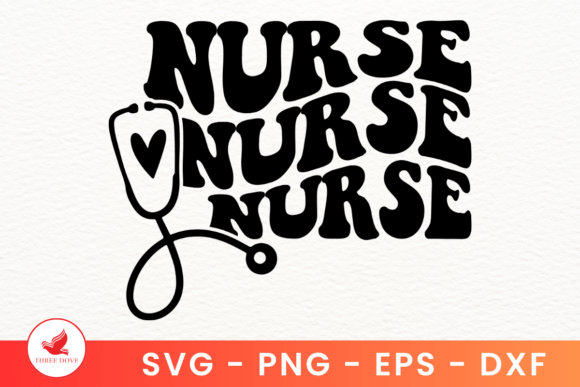
Let’s be honest—I opened the Nurse Wavy SVG zip file while prepping for a client order: three custom embroidered tote bags for a local nurse appreciation event. Not just any totes—medium-weight canvas, medium-stretch cotton blend lining, and a request for “something warm but not cutesy, professional but with personality.” That’s when Nurse Wavy SVG landed on my screen. First impression? It breathes. The wavy line work feels fluid and intentional—not stiff or over-rendered—and the retro styling lands somewhere between mid-century charm and modern minimalism. It’s not a cartoon; it’s a nod. A quiet, confident nod to caregiving.
What This Design *Actually* Wants to Be Stitched On
The Nurse Wavy SVG isn’t shouting for center-stage on a full-chest sweatshirt. It leans into subtlety. I immediately pictured it stitched cleanly on the left chest of a soft heather-grey crewneck, or as a single-line satin stitch motif on the pocket of a linen apron for a boutique café with nursing staff on rotation. It also shines as a small embroidered patch—think 2.5” wide—sewn onto a denim jacket sleeve or pinned to a scrub cap. Its rhythm is gentle, its scale modest, and its visual weight light enough for baby onesies (using ultra-soft thread and lightweight stabilizer) but distinct enough to read clearly on a tea towel or pillow cover in a pediatric clinic waiting room.
Where it truly earns its keep is in personalized gifts: a nurse’s birthday mug sleeve, a graduation gift for a new RN, or a holiday embroidery kit for crafters who want meaningful, non-generic themes. As a T-Shirt Designs asset, it works best as a standalone graphic—not layered under text or stacked with icons. Its strength is simplicity, not complexity.
Where Embroidery Reality Meets the Wavy Line
Here’s what I tested—and what I’d advise you to test before committing to a batch:
- Hoop size matters. The design fits comfortably in a 4×4 hoop, but pushing it beyond that risks losing the delicate curve definition in satin-stitched sections. If you’re scaling up for a tote bag front panel, consider simplifying the wave path manually—or use it as-is at original size and pair it with clean negative space.
- Fabric texture changes everything. On smooth piqué or combed cotton, the wavy outline holds crispness. On terry cloth, fleece, or heavy twill, the curves soften visually—even with good cutaway stabilizer. For textured fabrics, increase stitch density slightly in satin areas and always run a scrap test.
- Dark fabric demands contrast thought. The Nurse Wavy SVG has no built-in fill—it’s an outline-based Graphics file. That means your thread color choice carries the entire mood. Navy on charcoal reads calm and professional; bright coral on black feels celebratory. Avoid pale pastels on darks unless you’re using high-sheen rayon or metallic thread for lift.
- Curved surfaces need planning. Caps and curved sleeves require repositioning the design to follow grain and avoid distortion. The wavy shape adapts well—but only if digitized with moderate underlay and low jump stitch count. Since this is an SVG/PNG download (not a pre-digitized embroidery file), confirm your digitizer understands how to translate those smooth vector curves into clean satin runs without puckering.
Design Integrity in Commercial & Handmade Contexts
As a craft business owner, I care deeply about how a design affects perceived value—not just stitch time. Nurse Wavy SVG elevates a basic tote or sweatshirt because it feels considered. It doesn’t scream “mass-produced clip art.” Customers notice that. I’ve seen buyers pause longer on listings featuring this kind of intentional, theme-aligned artwork—especially in niches like healthcare gifting, boutique apparel, or handmade nursery decor.
It builds trust quietly: no exaggerated fonts, no cluttered iconography, no forced sentimentality. Just one graceful, human-shaped wave—evoking both motion and care. That clarity translates directly to brand consistency for Etsy sellers curating a cohesive shop aesthetic, or small shops building a recognizable line of embroidered wellness goods.
But—and this is critical—it does *not* carry its own licensing terms in the product description. As a designer, I treat every digital embroidery file like a raw material: useful only after confirming commercial rights. Before listing finished embroidered patches or adding Nurse Wavy SVG to a printable mockup bundle, verify whether redistribution or resale of derivative works is permitted. When in doubt, reach out to the creator.
Practical Notes Every Embroiderer Should Run Through
- Test the design on scrap fabric *in your actual production setup*—same stabilizer, same thread, same machine tension.
- Check small details: does the narrowest part of the wave hold integrity at your chosen stitch count? Does the curve tighten too much at corners?
- Review thread color contrast on both light and dark fabric swatches—not just digitally. Your screen lies.
- Use proper stabilizer: tear-away for stable wovens, cutaway for knits or stretchy blends, and lightweight fusible for baby items.
- Compare black-and-white mockups alongside color versions—this design relies heavily on contour, so grayscale readability is essential.
- Ask yourself: does this support the *finished product*’s purpose? A holiday embroidery gift needs durability through washing; a boutique apron needs drape-friendly stitching; a personalized gift needs emotional resonance—not just technical accuracy.
In short: Nurse Wavy SVG is a thoughtful, restrained design asset—not flashy, not fussy, but reliably effective when matched to the right project. It won’t solve every embroidery challenge, but it solves one beautifully: how to honor a profession with grace, not gimmickry. Whether you're stitching for a client, stocking a craft fair table, or building a digital product library, it’s the kind of embroidery design that earns repeat use—not because it’s trendy, but because it’s true.