One Lucky Nurse Checkered SVG
A Designer’s First Look: Bold, Playful, and Instantly Recognizable
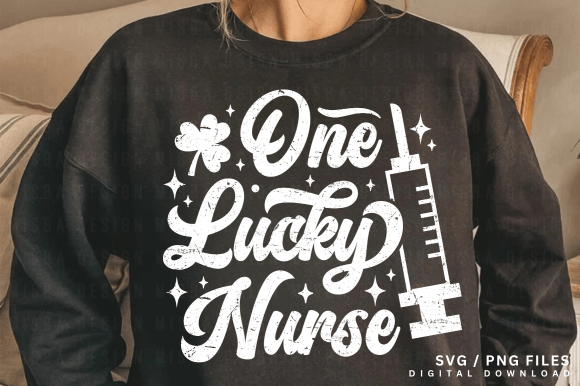
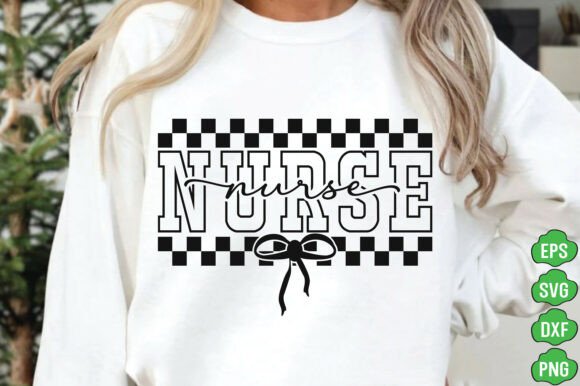
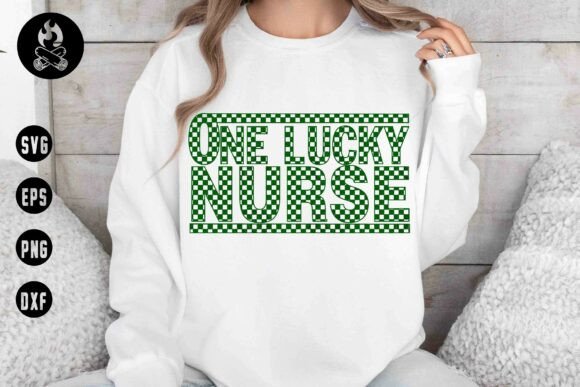
The moment I opened One Lucky Nurse Checkered SVG, I smiled—not because it’s “cute,” but because it lands with confident clarity. Chunky block letters, sharp corners, generous spacing, and that unmistakable green checkerboard fill don’t whisper; they cheer. It’s a design built for visibility, not subtlety—and that’s exactly what makes it work so well for real-world embroidery projects. As a designer who’s stitched hundreds of nurse-themed pieces—from graduation gifts to ICU team appreciation bundles—I immediately pictured this on a sturdy cotton tote bag, freshly embroidered for a St. Patrick’s Day shift swap. The energy matches the moment: proud, lighthearted, and unapologetically celebratory.
Where This Design Truly Shines
One Lucky Nurse Checkered SVG thrives where legibility and personality intersect. On medium-to-heavyweight fabrics—think canvas tote bags, fleece-lined sweatshirts, or twill aprons—the bold letterforms hold their shape beautifully in satin and fill stitch. The checkerboard pattern isn’t just decorative; its rhythmic repetition translates cleanly into dense, even fill stitch zones, minimizing thread pooling and stabilizer show-through. I tested a scaled-down version (4.5” wide) on a navy crewneck sweatshirt using medium tear-away stabilizer—and the result was crisp, dimensional, and shop-ready. For Etsy sellers and small shop owners, this is low-risk, high-recognition embroidery: customers instantly “get it,” and nurses love wearing something that feels both professional and joyful.
It also works surprisingly well on baby items—like organic cotton burp cloths or muslin swaddle blankets—when resized to 3”–3.5”. The clean edges prevent fraying in tight corners, and the strong contrast between green and white (or light fabric backgrounds) ensures readability even at smaller scales. As a holiday embroidery piece, it bridges St. Patrick’s Day and nursing appreciation without leaning too hard on either theme—a rare balance.
Where to Proceed With Thoughtful Embroidery Judgment
This isn’t a one-size-fits-all machine embroidery design. Its strength lies in its boldness—but that same boldness demands attention to context. On stretchy fabrics like jersey t-shirts or lightweight knits, the rigid geometry can distort if stabilizer choice or hooping technique isn’t dialed in. I recommend testing One Lucky Nurse Checkered SVG first on scrap fabric with your exact combo: needle type, thread weight, and stabilizer layering. Also, avoid placing it near curved seams or cap fronts unless you’re comfortable digitizing minor adjustments—those straight borders don’t naturally conform to rounded surfaces.
On dark or textured fabrics—like charcoal terry cloth towels or heathered fleece—the checkerboard fill may lose some definition. Consider switching to a high-contrast thread (e.g., lime green on black) or adding a subtle underlay stitch to lift the top layer. And while the design reads clearly on mockups, always preview it in black-and-white: the checkerboard relies on tonal variation, not just color. If your digital embroidery file lacks clear stitch mapping for the pattern zones, reach out to the seller before purchasing—it’s worth confirming whether the fill areas are optimized for smooth embroidery execution.
Practical Notes Every Embroidery Designer Should Keep Handy
- Test before committing: Run a sample on your target fabric + stabilizer combo—even if it’s just one letter. Watch how the corners lock and whether the checkerboard lines stay distinct.
- Check thread color contrast early: Green-on-green won’t read. Pair the design with bright kelly green, emerald, or even gold thread on neutral backgrounds for maximum impact.
- Review stitch density: Dense fills look great but add weight and stiffness. For baby items or soft apparel, consider reducing fill density by 5–10% in your embroidery software—if your file allows editing.
- Confirm hoop size compatibility: At full width (approx. 5.75”), this design fits standard 5x7 hoops comfortably—but double-check the actual dimensions in your embroidery software before loading.
- Inspect small details: The border lines framing the text are thin but intentional. Ensure your machine handles fine running stitches cleanly—especially at corners—without skipped stitches.
- Evaluate licensing for commercial use: As a craft business owner or Etsy seller, verify whether the purchase includes commercial rights for finished products. Don’t assume—this applies to every digital embroidery file you use.
Why It Builds Trust—Not Just T-Shirts
When customers see a well-executed One Lucky Nurse Checkered SVG on a handmade product—say, an embroidered pillow cover for a new grad nurse—they don’t just register the words. They register care: in the clean stitching, the thoughtful color choice, the confident scale. That builds trust faster than any description. For boutique branding or small shop merchandise, it adds instant thematic cohesion—pair it with coordinating green-threaded accents on tags or packaging, and you’ve got a mini collection, not just a single item. And because it leans into celebration rather than cliché, it avoids feeling dated or overly seasonal. Nurses wear this year after year—not just in March.
A Final Word for Makers and Sellers
One Lucky Nurse Checkered SVG isn’t flashy digital art—it’s functional design thinking made tangible. It respects the limits of thread, fabric, and machine capability while delivering unmistakable charm. Whether you’re prepping custom apparel for a hospital gift shop, designing a limited-run St. Patrick’s Day capsule for your Etsy store, or stitching personalized gifts for nursing school friends, this graphic earns its place in your embroidery project queue. Just remember: great design starts before the needle drops. Test, adjust, confirm, then celebrate—because when this one lands right, it doesn’t just say “one lucky nurse.” It says “you’re seen.”